
Rail Remedial Works
Specialist rail repair and remedial engineering for safer, stronger railway infrastructure.
Get a Free Quote From Us Today!
We aim to get back to you in 24 hours.
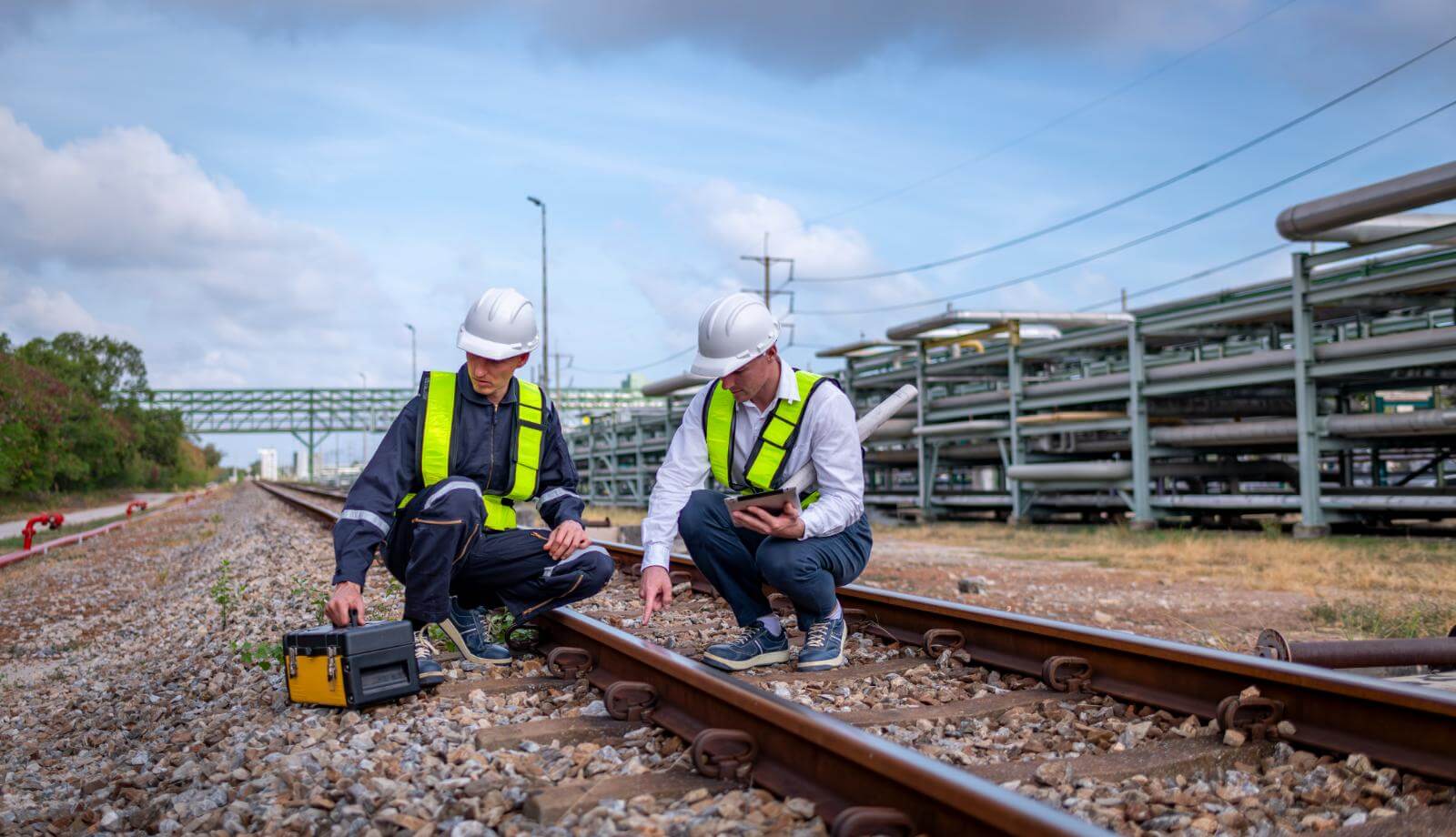
At Rail Remedial Works, we provide specialist repair, maintenance, and corrective engineering services for railway infrastructure across the UK. Our service focuses on identifying and rectifying defects, restoring operational performance, and maintaining the safety and reliability of rail networks.
By employing technical survey methods and industrial-grade repairs, rail remedial works ensure efficient fault resolution, regulatory compliance, and long-term infrastructure integrity to support high-frequency traffic while preventing catastrophic asset failure.
Our specialist repair teams deliver fast, compliant remedial solutions that restore rail safety, improve asset performance, and minimise service disruption.
Contact Rail Remedial Works today for expert railway repair and corrective engineering support.
Get a Free No Obligation Quotation Today
Why Should You Choose Professional Rail Remedial Works Services?
Choosing professional services for rail remedial works ensures that your infrastructure is restored by expert engineers with rail-specific knowledge. Expert technicians use industrial-grade grout and precision-drilling tools that generic construction firms cannot provide.
This professional oversight reduces project risk by ensuring all repairs are compatible with track geometry requirements and verified against modern operational safety standards
What Services Are Included in Rail Remedial Works?
A comprehensive range of technical and structural tasks is provided by rail remedial works to restore network reliability:
- Track Alignment Correction – The mechanical adjustment of rail geometry to ensure smooth transit and prevent excessive component wear.
- Concrete Structural Repair – Restoring reinforced concrete bridge decks and retaining walls using high-performance mortars and grouting.
- Signalling Fault Remediation – Repairing electrical and electronic signalling assets to maintain critical communication and train spacing safety.
- Drainage Channel Improvement – Implementing large-scale trackside water management systems to prevent ballast washout and structural saturation.
- Rail Web Reinforcement – Strengthening damaged rail sections using specialised plates or corrective welding techniques to extend asset life.
When Should You Arrange Rail Remedial Works?
You should arrange for rail remedial works as soon as a technical inspection identifies track geometry issues or significant structural spalling. Prompt intervention prevents the acceleration of decay, which results in significantly higher repair costs and potential emergency line closures.
Engaging rail remedial works early ensures that statutory safety audits are satisfied and that minor defects do not progress into safety-critical incidents that endanger the site workforce.
Where Can Rail Remedial Works Be Carried Out Across Railway Infrastructure?
The engineering protocols used by rail remedial works are applicable to various transport environments including mainline tracks, urban metro systems, and heavy freight corridors:
- Mainline Railways – Comprehensive repairs to national rail corridors involving high-speed track realignments and bridge maintenance.
- Metro and Underground Systems – Discreet and rapid remediation within tunnels and station platforms where space is highly restricted.
- Freight Rail Corridors – Strengthening tracks and retaining structures designed to sustain heavy axle loads and industrial transit.
- Rolling Stock Depots – Maintaining maintenance facilities and yards to ensure that support infrastructure remains operationally ready.
- Infrastructure Upgrade Projects – Providing technical support for the integration of new assets into existing historical rail frameworks.
Which Rail Operators, Contractors, and Infrastructure Projects Need Rail Remedial Works?
Various public and private transport entities rely on the corrective engineering provided by rail remedial works to maintain their legally mandated safety standards:
- Mainline Network Managers – Organisations responsible for the ongoing safety and reliability of national rail transport corridors.
- Metro System Operators – Transport bodies managing high-frequency urban rail lines that require rapid and discreet remediation.
- Freight Terminal Managers – Operators of industrial hubs that experience heavy axle loads and require structural strengthening.
- Heritage Railway Societies – Organisations maintaining historical rail assets that necessitate sensitive and specialised corrective engineering.
- Light Rail Authorities – Local government bodies managing tram networks where track-to-road interfaces require consistent maintenance.
How Much Do Rail Remedial Works Cost?
The cost of rail remedial works ranges from £1,500 to over £100,000, depending on the scope of the repair and the accessibility of the asset.
Technical cost drivers include the tonnage of specialised steel, the complexity of signalling integration, and the duration of planned track possessions. Furthermore, logistical costs are influenced by the requirement for emergency mobilisation for safety-critical failures and the specific depth of trackbed stabilisation required to reach structural compliance.
Contact Rail Remedial Works to get customised prices for rail remedial works at your property.
Request a free quote
How Does the Rail Remedial Works Process Work?
The technical workflow managed by rail remedial works follows a disciplined sequence starting with a forensic building audit and concluding with safe removal. Technicians perform precise ultrasonic tests to determine the extent of internal fractures before coordinating the logistical delivery of modular steel components.
The final stage involves the installation of permanent support structures followed by the removal of temporary works, ensuring the property is fully secure for operation.
How Quickly Can Rail Remedial Works Be Scheduled and Completed?
The scheduling of rail remedial works typically reaches the operational phase within 48 hours for emergency structural or signalling faults. For larger projects, the timeline depends on possession window availability and the procurement of bespoke structural steel.
Efficient mobilisation ensures that corrective engineering tasks are completed during nighttime shifts to ensure that all repairs meet stringent quality benchmarks.
What Rail Industry Standards and Safety Regulations Apply to Rail Remedial Works?
Every project managed by rail remedial works adheres strictly to the Network Rail standards and the Construction Design and Management regulations. We ensure all mechanical components meet PUWER 98 requirements and that every technician is PTS certified for trackside work.
Adhering to these rigorous codes protects the workforce and ensures that every repair provides a legally defensible record of compliance.
Contact Rail Remedial Works for a consultation to get rail remedial works tailored to your organisation’s risks and responsibilities.
speak with our team today
What People are Saying About Us
★★★★★
“We needed urgent remedial work after a track defect was identified during inspection, and the team responded immediately. Their fast action prevented major disruption and restored operations safely.”
Zara Whitmore
London
★★★★★
“Rail Remedial Works delivered excellent structural repairs on a critical section of our network. Their technical knowledge and planning gave us complete confidence throughout the project.”
Haroon Ahmed
London
★★★★★
“The engineers were highly professional and worked efficiently within tight possession windows. Their repair work improved both safety and long-term reliability.”
Ewan Sinclair
London
★★★★★
“From inspection to completion, the service was exceptional. Their remedial solutions reduced downtime and helped us avoid costly emergency closures.”
Nerys Davies
London
Our Locations
We are proud to work nationally across the UK, allowing us to ensure we can provide services to you.
For a full list of counties we cover in the UK, see below.